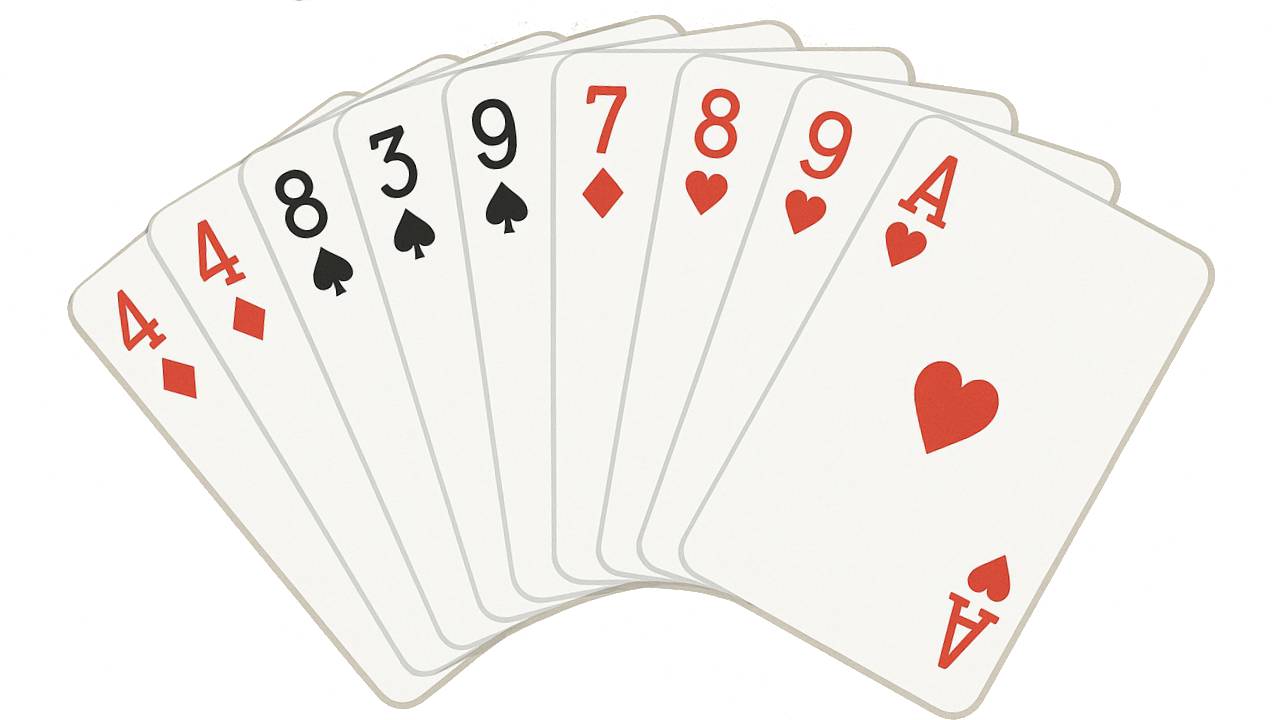
Gin Rummy Rules
Gin Rummy is a classic two-player card game where you draw and discard cards to form sets and runs. Be the first to arrange your entire hand into melds, or knock when your unmatched cards (deadwood) total 10 points or less.
Last updated: Mar 2026
Objective
The goal of Gin Rummy is to be the first player to arrange all (or most) of your cards into melds — either sets of matching cards or runs of consecutive cards in the same suit.
You score points by having less deadwood (unmatched cards) than your opponent. The first player to reach 100 points across multiple rounds wins the game.
Setup
Gin Rummy is played with a standard 52-card deck (no jokers). To set up a round:
- Shuffle the deck thoroughly.
- Deal 10 cards to each player, one at a time.
- Place the remaining cards face down in the center to form the stock pile.
- Flip the top card of the stock pile face up next to it to start the discard pile.
- The non-dealer decides whether to take the face-up card or pass. If they pass, the dealer may take it. If both pass, the non-dealer draws from the stock pile and play begins.
Card Values
Each card has a point value used for calculating deadwood:
- Ace — 1 point
- Number cards (2–10) — Face value (e.g., a 7 is worth 7 points)
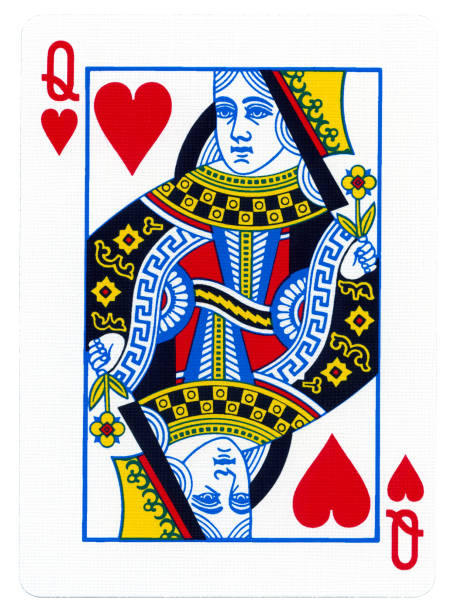
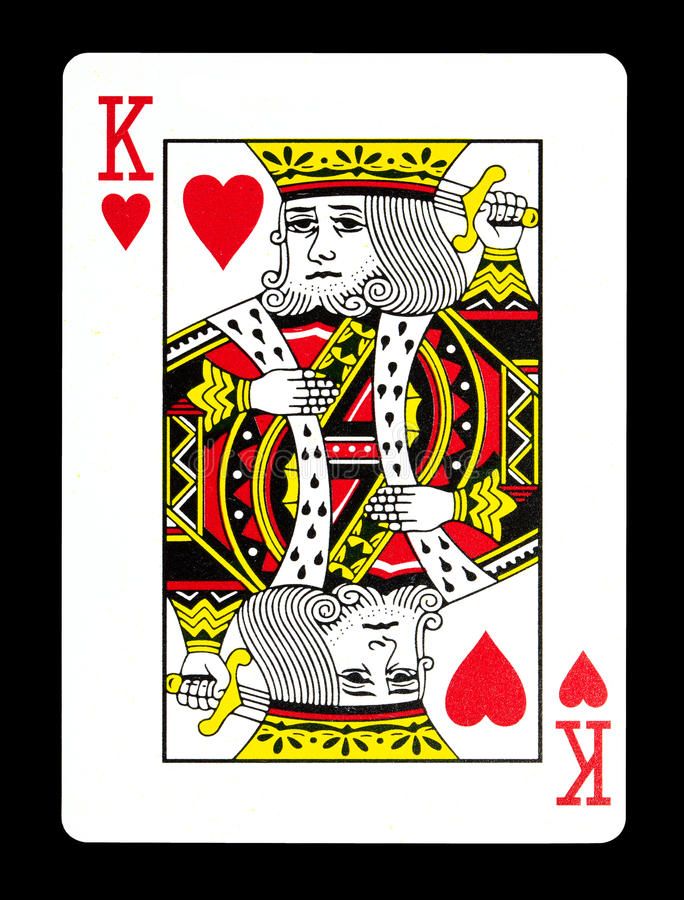
- Jack, Queen, King — 10 points each
The total point value of your unmatched cards (deadwood) determines when you can knock and how the round is scored.
How to Play
Players alternate turns. On each turn you must:
- Draw one card — Take either the top card of the discard pile (face-up) or the top card of the stock pile (face-down).
- Discard one card — Place one card from your hand face up on the discard pile.
After drawing you will have 11 cards. After discarding you return to 10. Continue taking turns until a player knocks, goes gin, or the stock pile runs out.
If only 2 cards remain in the stock pile and neither player has knocked, the round ends in a draw with no points awarded.
Forming Melds
A meld is a valid grouping of 3 or more cards. There are two types:
Sets (Groups)
Three or four cards of the same rank but different suits.
- Example: 7♥ 7♦ 7♠ (set of three 7s)
- Example: Q♥ Q♦ Q♠ Q♣ (set of four Queens)
Runs (Sequences)
Three or more consecutive cards of the same suit.
- Example: 4♥ 5♥ 6♥ (run of three in hearts)
- Example: 9♠ 10♠ J♠ Q♠ (run of four in spades)
A card can only belong to one meld. Aces are always low — they cannot be placed above a King to form a run (Q-K-A is not valid).
Knocking
After drawing and before discarding, you may knock if your deadwood (unmatched cards) totals 10 points or less.
To knock:
- Place your discard face down on the discard pile to signal a knock.
- Lay your hand face up on the table, arranging your cards into melds and separating your deadwood.
- Your opponent then lays out their melds.
- Your opponent may lay off their unmatched cards on your melds (adding to your sets or extending your runs), which reduces their deadwood.
The player with less deadwood wins the round and scores the difference.
Undercut
If the opponent's deadwood is equal to or less than the knocker's deadwood after laying off, the opponent scores an undercut bonus of 25 points plus the difference in deadwood.
Gin & Big Gin
Gin
If all 10 of your cards form melds with zero deadwood, you have gin. Knock by discarding your final unmatched card and declare gin.
- Your opponent cannot lay off cards on your melds.
- You earn a gin bonus of 25 points plus the total value of your opponent's deadwood.
Big Gin
If all 11 cards in your hand (after drawing, before discarding) form valid melds, you may declare Big Gin without discarding.
- Your opponent cannot lay off cards.
- You earn a bonus of 31 points plus your opponent's deadwood.
Scoring
Points are accumulated over multiple rounds. Here is how scoring works:
Round Scoring
- Knock win — The knocker scores the difference between both players' deadwood totals.
- Undercut bonus — If the opponent ties or beats the knocker, the opponent gets 25 points plus the deadwood difference.
- Gin bonus — 25 points plus the opponent's total deadwood. No layoffs allowed.
- Big Gin bonus — 31 points plus the opponent's total deadwood. No layoffs allowed.
Game Bonus
The first player to reach 100 points wins the game and receives a game bonus of 100 points.
Line / Box Bonus
Each player earns 25 points for every round they won (called a line or box bonus). These are added after someone reaches 100.
Shutout (Schneider)
If the loser did not win a single round, the winner's game bonus is doubled to 200 points.
Improve your Gin Rummy game with these strategies:
- Watch the discard pile — Pay attention to what your opponent picks up and discards. This tells you what melds they are building and which cards are safe to discard.
- Discard high deadwood early — Get rid of high-value unmatched cards (Kings, Queens, Jacks) early to reduce your deadwood total and give yourself the option to knock sooner.
- Keep flexible cards — Middle cards (5, 6, 7) are the most versatile because they can form runs in either direction and are part of more possible combinations.
- Avoid drawing from the discard pile when possible — Taking from the discard pile gives your opponent information about your hand. Draw from the stock pile to keep your hand secret.
- Don't wait for gin — If you can knock with low deadwood, it is often better to knock early rather than wait for a perfect gin hand. The longer you wait, the more time your opponent has to improve their hand.
- Count deadwood constantly — Always know your deadwood total. You should be ready to knock the moment you reach 10 or below.
Gin Rummy has many popular variations:
Oklahoma Gin
The face-up card that starts the discard pile sets the maximum deadwood value for knocking in that round. For example, if a 4 is turned up, you can only knock with 4 or less deadwood. If the card is a spade, all scores for that round are doubled.
Hollywood Gin
Three games are played simultaneously. Your first round win counts toward game 1, your second win counts toward games 1 and 2, and from the third win onward each win counts toward all three games. Keeps track of multiple scores for a longer session.
Straight Gin
Knocking is not allowed. You must achieve gin (zero deadwood) to end the round. This leads to longer, more strategic rounds.
Tedesco Gin
Similar to Oklahoma Gin, but if the face-up card is an ace, players must go gin (no knocking). Also includes a bonus for winning multiple consecutive rounds.
Mahjong Gin
Each player receives 13 cards instead of 10, and you need to form melds with all 13 to go gin. This variation allows aces to be high or low in runs.
Special Cards
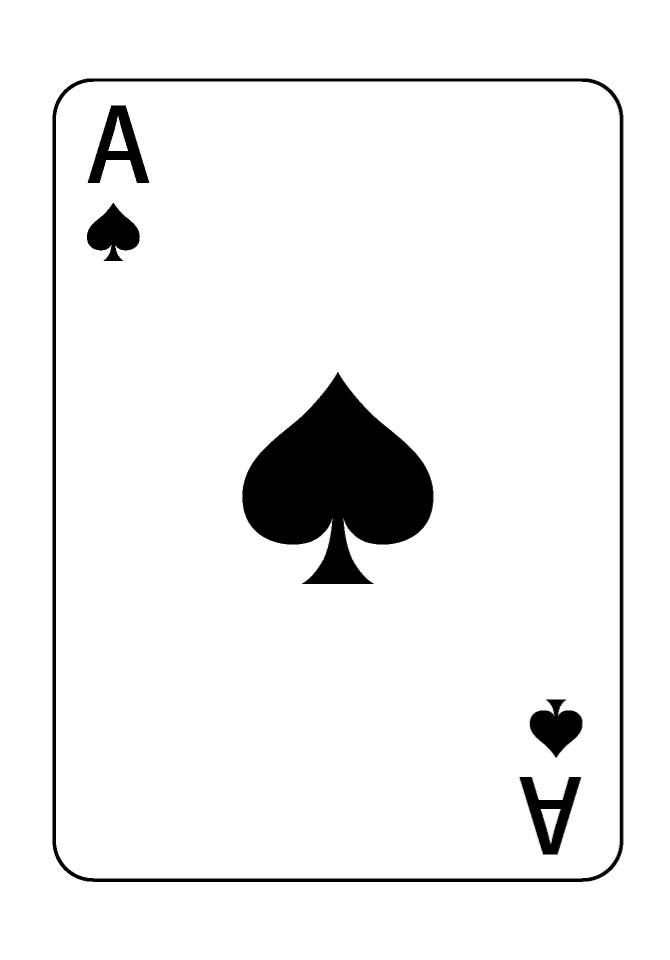
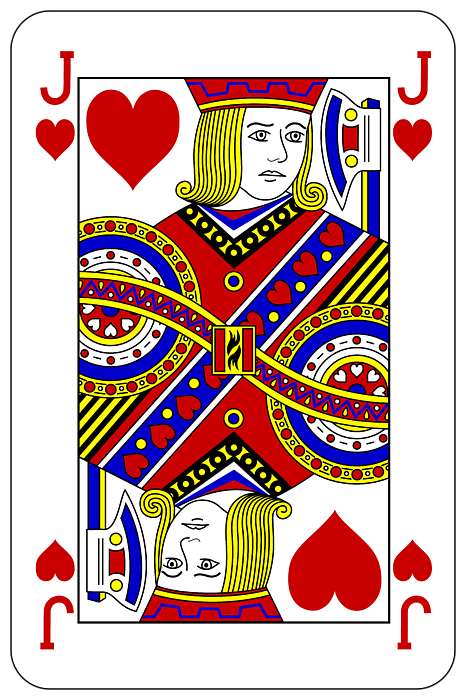
Frequently Asked Questions
No. In standard Gin Rummy, aces are always low and worth 1 point. You can make a run of A-2-3 but not Q-K-A. Some variations like Mahjong Gin allow aces to be high or low, but this is not part of the standard rules.
Deadwood refers to the cards in your hand that are not part of any meld (set or run). The total point value of your deadwood determines when you can knock and how the round is scored. Face cards count as 10 points each, aces as 1, and number cards at face value.
Knocking means ending the round when your deadwood totals 10 points or less — you may still have some unmatched cards. Going gin means all 10 of your cards are in melds with zero deadwood. Gin earns a 25-point bonus, and your opponent cannot lay off cards on your melds.
No. When a player goes gin (zero deadwood), the opponent cannot lay off any of their unmatched cards. All of the opponent's deadwood counts toward the gin player's score. This is one of the main advantages of going gin versus simply knocking.
If only 2 cards remain in the stock pile and neither player has knocked or gone gin, the round ends in a draw. No points are awarded to either player and a new round is dealt.
The standard target is 100 points accumulated over multiple rounds. When a player reaches 100 points, they receive a 100-point game bonus. Each player also gets 25 points for every round they won (line bonus). If the loser never won a round, the winner's game bonus is doubled to 200 (shutout bonus).
No comments yet. Be the first to share your thoughts!