
American Mahjong Rules
American Mahjong is a four-player tile game played with 152 tiles including Jokers. Players draw and discard tiles to complete specific hands listed on the annual National Mah Jongg League (NMJL) card. It combines strategy, pattern recognition, and a touch of luck.
Last updated: Mar 2026
Introduction
American Mahjong (also spelled Mah Jongg) is a tile-based game for exactly 4 players. Originating from traditional Chinese Mahjong, the American version was standardized in 1937 by the National Mah Jongg League (NMJL), which publishes an official card of valid hands each year.
The objective is to be the first player to complete a valid hand — a specific combination of 14 tiles (or more, with Jokers) matching one of the patterns on the current year's NMJL card.
A typical game takes 60–120 minutes for a full session (usually four rounds of four hands each).
The Tiles
An American Mahjong set contains 152 tiles:
| Tile Type | Count | Description |
|---|---|---|
| Craks (Characters) | 36 (4 each of 1–9) | Marked with Chinese characters and numbers 1–9 |
| Bams (Bamboos) | 36 (4 each of 1–9) | Decorated with bamboo stick designs |
| Dots (Circles) | 36 (4 each of 1–9) | Decorated with circular dot patterns |
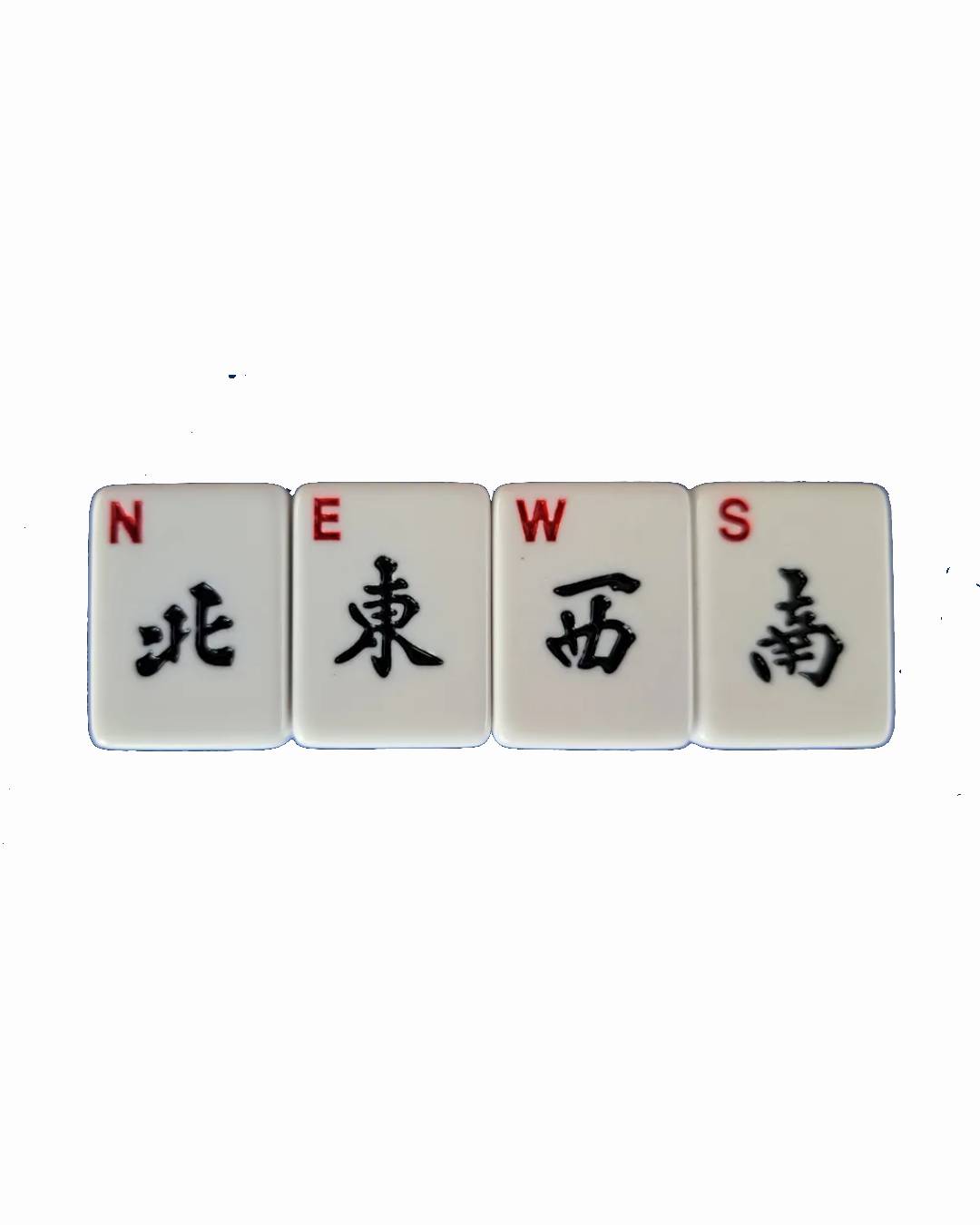
| Winds | 16 (4 each of N, E, S, W) | North, East, South, and West |
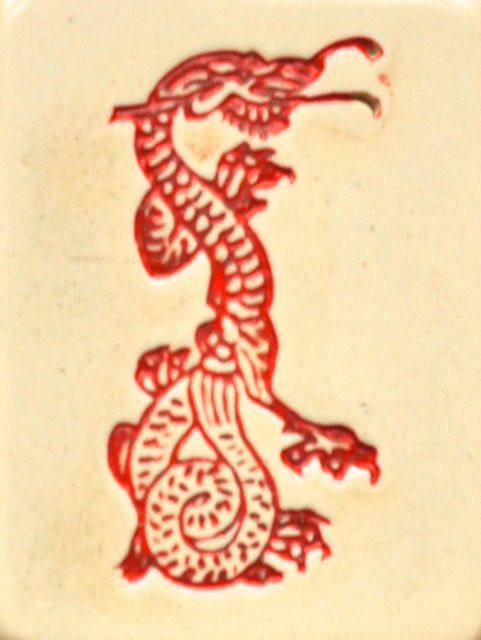
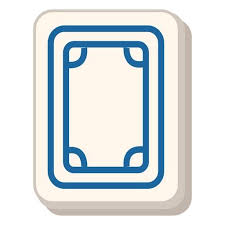
| Dragons | 12 (4 each of Red, Green, White/Soap) | Red, Green, and White (blank, also called Soap) |
| Flowers | 8 | Numbered 1–8, all identical in function |
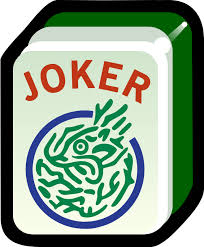
| Jokers | 8 | Wild tiles that can substitute for any tile in a group of 3 or more identical tiles |
The three numbered suits (Craks, Bams, Dots) each run from 1 to 9 with four copies of each tile.
Setup
Follow these steps to set up the game:
- Determine Seating: Each player rolls the dice. The highest roller chooses their seat and becomes East (the dealer) for the first hand. Going counter-clockwise, the other seats are South, West, and North.
- Place the NMJL Card: Every player should have a copy of the current year's National Mah Jongg League card for reference. This card lists all valid winning hands.
- Mix the Tiles: Turn all 152 tiles face down on the table and shuffle them thoroughly. This is called "washing" or "swimming" the tiles.
- Build the Walls: Each player builds a wall of tiles 2 tiles high and 19 tiles long (38 tiles per wall). Push the four walls together to form a hollow square in the center of the table.
- Break the Wall: East rolls the dice. Count that many stacks from the right end of East's wall and break the wall at that point.
- Deal the Tiles: Starting from the break, each player takes 2 stacks (4 tiles) at a time, going counter-clockwise around the walls. Repeat until each player has 12 tiles. Then each player takes 1 more tile for a total of 13 tiles. East takes 1 extra tile (14 tiles total) since East goes first.
- Rack Your Tiles: Place your tiles on your rack so only you can see them. Organize them by suit and start looking for potential hands on the NMJL card.
The Charleston
Before gameplay begins, players exchange unwanted tiles in a ritual called the Charleston. This is a unique feature of American Mahjong.
First Charleston (Mandatory)
- First Right: All players simultaneously pass 3 tiles to the right.
- First Across: All players simultaneously pass 3 tiles across (to the player opposite).
- First Left: All players simultaneously pass 3 tiles to the left. You may "blind pass" up to 3 tiles — passing tiles you received from the right without looking at them.
Second Charleston (Optional)
After the first Charleston, any player may stop the second Charleston. If all four players agree to continue:
- Second Left: Pass 3 tiles to the left.
- Second Across: Pass 3 tiles across.
- Second Right: Pass 3 tiles to the right. Blind passing is allowed on this last pass.
Courtesy Pass (Optional)
After the Charleston(s), the player across from you may agree to a courtesy pass of 1, 2, or 3 tiles. Both players must exchange the same number of tiles.
Tip: Use the Charleston strategically to focus your hand toward one or two potential NMJL card hands.
How to Play
After the Charleston, gameplay begins with East.
Turn Structure
Each turn follows these steps:
- Draw: The current player draws 1 tile from the wall (East skips this on the first turn since they already have 14 tiles).
- Evaluate: Check if you have a complete winning hand (Mah Jongg). If so, declare it!
- Discard: Place 1 unwanted tile face up in the center of the table and announce its name clearly (e.g., "3 Bam", "West", "Red Dragon").
Important Turn Rules
- Play proceeds counter-clockwise (to the right).
- Always announce your discard clearly so all players can hear.
- Once you discard a tile and remove your hand from it, it is "dead" and cannot be taken back.
- Keep your rack organized and your exposed tiles (called tiles) visible to all.
Calling Tiles (Picking from Discards)
A key feature of Mahjong is the ability to claim another player's discard. You may call a discarded tile only if it completes a specific group in your hand.
Rules for Calling
- You may call a discard for an exposure (a group of 3 or more identical tiles that you reveal on top of your rack) or to complete Mah Jongg.
- You can call any player's discard, not just the previous player's.
- You cannot call a tile for a single or pair — only for groups of 3 or more, unless it completes Mah Jongg.
- After calling, you must expose the completed group face up on top of your rack, then discard 1 tile.
- Play continues to the right of the caller, skipping any players in between.
Calling Priority
If multiple players want the same discard:
- Mah Jongg (winning the hand) takes highest priority.
- If no one is calling for Mah Jongg, the next player in turn order has priority.
Note: Unlike some other Mahjong variants, American Mahjong does not use Chows (sequential runs) as exposures. All called groups must be identical tiles (Pungs, Kongs, or Quints).
Exposures
An exposure is a group of identical tiles displayed face up on your rack. Exposures are formed when you call a discard or when you choose to reveal a completed group from your hand.
| Exposure | Tiles | Description |
|---|---|---|
| Pung | 3 identical tiles | Three of the same tile (e.g., three 5 Dots) |
| Kong | 4 identical tiles | Four of the same tile (e.g., four Red Dragons) |
| Quint | 5 identical tiles | Five of the same tile (requires at least 1 Joker since only 4 of each tile exist) |
| Sextet | 6 identical tiles | Six of the same tile (requires at least 2 Jokers) |
Once exposed, tiles cannot be rearranged or returned to your hand (except Jokers — see Joker rules).
Concealed Hands: Some hands on the NMJL card are marked with a "C" meaning concealed. For these hands, you may not call discards except for the final tile to complete Mah Jongg. All groups must be formed by drawing from the wall.
Joker Rules
Jokers are a distinctive feature of American Mahjong. Here are the complete Joker rules:
- Jokers can substitute for any tile in a Pung, Kong, Quint, or Sextet (a group of 3 or more identical tiles).
- Jokers cannot be used in pairs or singles.
- Jokers cannot be used to represent Flowers in some hand categories (check the NMJL card — hands with "no Jokers" are restricted).
- A Joker cannot be discarded for Mah Jongg — no one may call a discarded Joker.
- If a Joker is discarded, it is dead — no player may pick it up.
Joker Exchange
If an opponent has an exposed group containing a Joker, and you hold the natural tile it represents, you may:
- On your turn (after drawing), swap your natural tile for the Joker in the exposure.
- Take the Joker into your hand for your own use.
- You must then discard a tile as normal.
You may not exchange Jokers from concealed hands, and you may only exchange during your own turn.
The NMJL Card & Winning Hands
The National Mah Jongg League (NMJL) card is the heart of American Mahjong. A new card is published each year, and it lists all valid winning hand patterns for that year.
Reading the Card
- Suits are indicated by colors or numbers. The card uses generic notation so any suit can fill a role unless specified.
- "F" = Flower tiles
- "D" = Dragon tiles (matching the suit color)
- "N, E, S, W" = Wind tiles
- "0" = White Dragon (Soap)
- "C" next to a hand means it must be concealed
- "X" means the hand has no Jokers allowed
- Numbers on the right side of each hand indicate its point value
Hand Categories
Hands are organized into categories such as:
- 2468 — hands using only even-numbered tiles
- Any Like Numbers — hands with matching numbers across suits
- Addition Hands — tile numbers that add up mathematically
- Quints — hands featuring groups of five
- Consecutive Run — sequential number patterns
- 13579 — hands using only odd-numbered tiles
- Winds – Dragons — hands featuring honor tiles
- Singles and Pairs — hands with no groups larger than 2
Each year the specific patterns change, so always use the current year's card.
Declaring Mah Jongg (Winning)
To win the hand, you must complete a valid hand from the NMJL card.
How to Declare
- When your 14th tile (drawn or called) completes a hand on the card, announce "Mah Jongg!"
- Reveal all your tiles to the other players for verification.
- All players check the hand against the NMJL card to confirm it is valid.
Ways to Win
- Self-drawn (from the wall): You draw the winning tile yourself.
- Called discard: Another player discards the tile you need.
Dead Hand
A hand is declared dead if:
- You expose tiles incorrectly (wrong number or grouping).
- You have too many or too few tiles.
- You make an exposure that cannot be part of any hand on the card.
A player with a dead hand continues to discard but cannot win. They may not call any more discards.
Scoring & Payment
After a player declares Mah Jongg, payment is calculated based on the hand's point value shown on the NMJL card.
Payment Rules
| Situation | Who Pays | Amount |
|---|---|---|
| Winner picks winning tile from the wall | All 3 other players pay the winner | 2× the hand value each |
| Winner calls a discard to win | Discarder pays the winner | 4× the hand value |
| Winner calls a discard to win | Other 2 players (non-discarders) pay | 2× the hand value each |
| Wall Game (no one wins) | No payment | — |
Wall Game: If all tiles in the wall are drawn and no one declares Mah Jongg, the hand is a draw (called a "Wall Game"). No payment is made, and the deal passes to the next player.
Rounds & Full Game
A full game of American Mahjong consists of 4 rounds (East, South, West, North), each with 4 hands — for a total of 16 hands.
Rotating the Deal
- After each hand, the deal passes to the next player (counter-clockwise) unless East wins — in which case East deals again.
- When the deal returns to the original East player, a new round begins.
Determining the Winner
At the end of all rounds, the player with the most points (or money) is the overall winner.
Many casual groups play a shorter session of one round (4 hands) or simply play for a set amount of time.
Use these tips to improve your American Mahjong game:
- Stay flexible early: Don't commit to a single hand too quickly. Keep your options open for the first few turns.
- Watch the discards: Pay attention to what tiles have been discarded. If many tiles you need are already gone, switch hands.
- Use the Charleston wisely: Pass tiles that don't fit any hand you're considering. Avoid passing Jokers.
- Manage Jokers carefully: Jokers are extremely valuable. Never discard a Joker unless you absolutely must.
- Play defense: If you suspect another player is close to Mah Jongg, avoid discarding tiles they might need. Discard tiles already on the table or tiles from a suit that appears safe.
- Concealed hands are risky but rewarding: They have higher point values but you cannot call discards (except the final tile).
- Know the card: Familiarize yourself with all hands on the current year's NMJL card before playing. The better you know the card, the faster you can spot opportunities.
American Mahjong has a rich tradition of etiquette:
- No talking about tiles: Do not discuss what tiles you have, need, or have passed during the Charleston.
- Announce discards clearly: Name every tile you discard aloud.
- Keep your hand hidden: Never let other players see your tiles.
- Prompt play: Try not to take too long on your turns.
- Mixing tiles: Everyone should help wash (shuffle) the tiles between hands.
- "Same, same, same": When passing during the Charleston, some groups say this to indicate all players are ready to pass simultaneously.
Common House Rules
- Some groups play with pie (betting) using coins or chips.
- Some groups allow table rules like paying extra for certain difficult hands.
- Some groups use a kitty — a shared pot that pays out for wall games or special achievements.
Special Cards


Example Scenarios
Calling a Discard for Exposure
Joker Exchange
Wall Game
Frequently Asked Questions
Yes. The NMJL card lists all valid winning hands and changes every year. You can purchase the current year's card from the National Mah Jongg League website (www.nationalmahjonggleague.org). Without the card, you will not know which hands are valid.
No. Jokers can only substitute for tiles in groups of 3 or more identical tiles (Pungs, Kongs, Quints, or Sextets). They cannot be used for singles or pairs.
If you make an incorrect exposure that cannot be part of any valid hand on the NMJL card, your hand is declared dead. You continue discarding each turn but cannot win or make further calls.
Only for the very last tile to complete Mah Jongg. For all other tiles in a concealed hand, you must draw from the wall.
American Mahjong uses 152 tiles (including 8 Jokers), requires an NMJL card, features the Charleston tile exchange, and does not use Chows (sequential runs). Chinese Mahjong uses 144 tiles, no Jokers, no Charleston, and allows Chows.
Each player starts with 13 tiles, except East (the dealer) who starts with 14 tiles. East then discards first instead of drawing.
You can discard a Joker, but no other player may pick it up. The Joker is dead once discarded. It is almost always a bad idea to discard a Joker.
"X" means no Jokers are allowed in that hand. You must complete the hand using only natural tiles.
Thank you for the nicely organized review and tips
this is a complete guide for beginners. was very helpful to start pplaying american mahjong